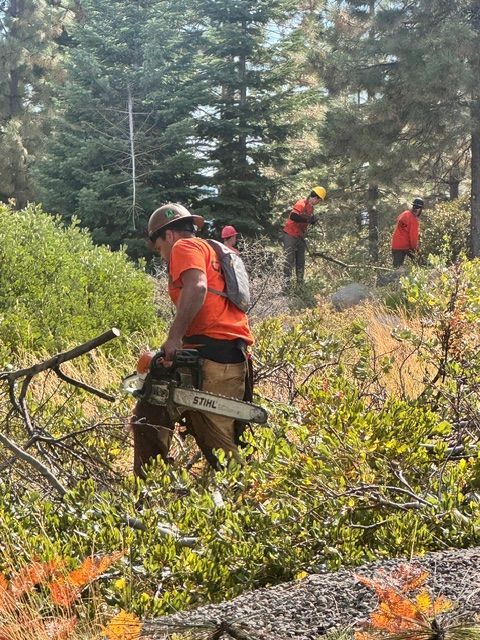
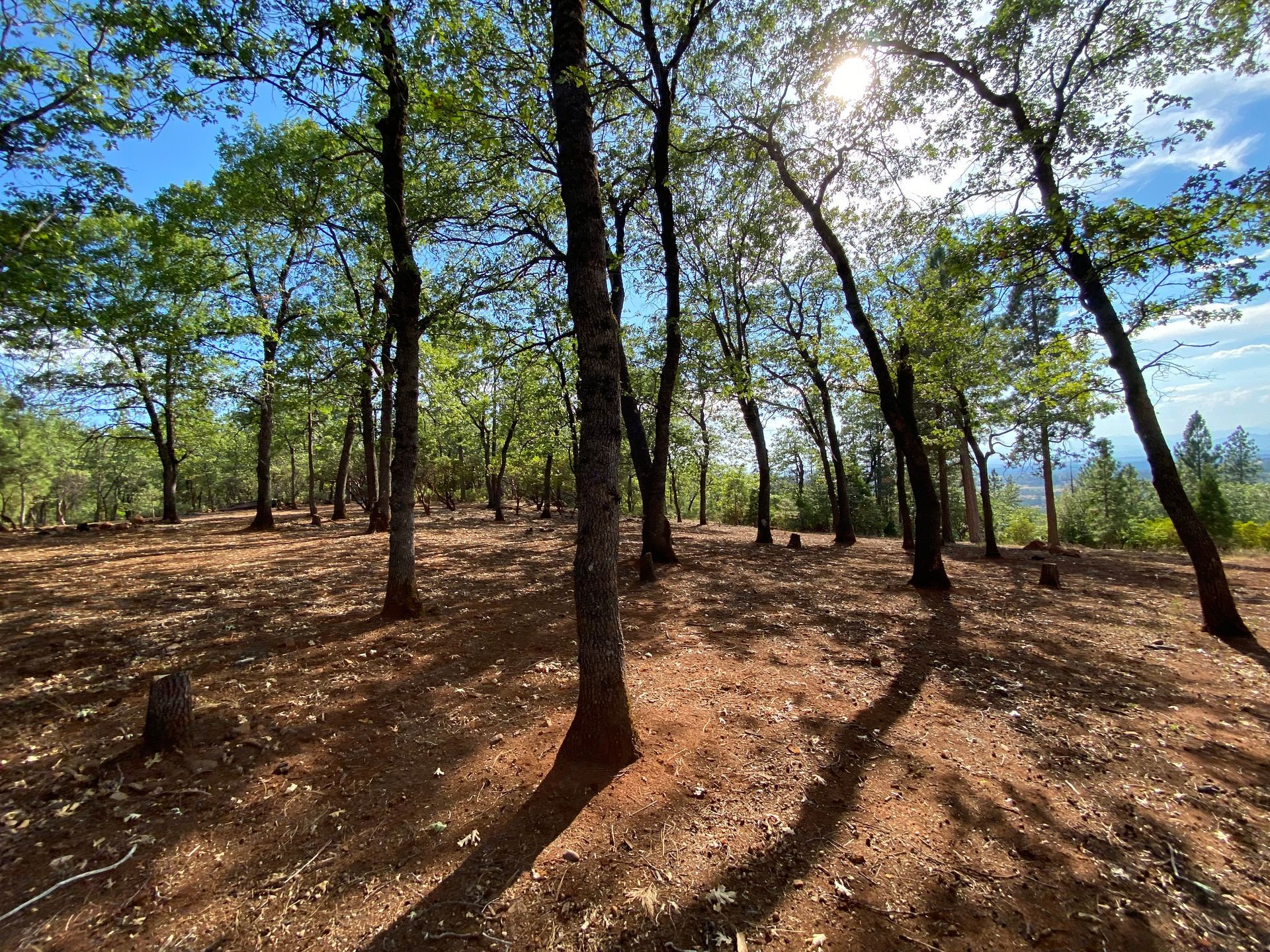
Why More Clearing Isn't Always Better for Defensible Space
Defensible Space Is About Where and How
— Not Just How Much
More Clearing Doesn’t Always Mean Better Wildfire Protection
Effective defensible space balances wildfire risk reduction with land health, soil stability, and long-term maintenance.
A common assumption — and why it’s incomplete
There is a belief the safest approach to defensible space is to remove as much vegetation as possible. The logic feels straightforward: less vegetation means less fuel, and less fuel should mean less wildfire risk.
Over time, through working with homeowners and seeing a wide range of defensible space outcomes, I’ve noticed a consistent pattern: clearing without intent can create new risks, while thoughtful spacing and material choices often lead to safer, healthier landscapes.
Effective defensible space is not about stripping the land bare. It’s about interrupting fire behavior while protecting the systems that keep a property stable over time.
When bare ground is appropriate — and when it isn’t
There are situations where bare mineral soil or non-combustible surfaces are absolutely necessary and supported by fire-protection guidance. Some locations on a property benefit from intense fuel reduction or non-combustible surfaces because they function as a strategic break—a place where fire spread can be slowed, redirected, or stopped long enough to reduce ignition potential and improve suppression options.
Areas where full vegetation removal is required
Bare or non-combustible zones are required or strongly recommended:
- Within 5 feet of structures (often referred to as Zone 0 or the ember-resistant zone)
- Around propane tanks and LPG systems (commonly within 10 feet, depending on code and local authority)
- Under decks, stairs, and attached structures
- Along high-risk ignition points, such as where structures meet slopes or prevailing wind corridors
In these areas, removing all combustible material is not optional — it’s a critical part of reducing ignition risk.
Safer alternatives to exposed dirt
Bare ground does not have to mean exposed, erosion-prone soil. When left untreated, exposed dirt can create ongoing maintenance and runoff issues, which is why non-combustible treatments are often the more effective long-term choice.
- Decorative rock or gravel beds
- Concrete or paver walkways and patios
- Stone retaining walls
- Water features or hardscaped buffers
These solutions reduce ignition potential while also protecting soil structure, improving drainage, and enhancing how the space functions and looks.
Where over-clearing becomes a problem
While bare mineral soil is one of the most effective ways to interrupt fire spread, using it outside of required non-combustible zones often does more harm than good by destabilizing soils, increasing erosion, and creating conditions for rapid, high-risk regrowth.
Fire behavior consequences of indiscriminate clearing
Wildfire does not spread simply because vegetation exists — it spreads through fuel continuity. Fire moves horizontally across fuels, vertically through ladder fuels, and through embers and radiant heat.
When vegetation is removed without a plan:
- Fuel continuity may remain in more dangerous configurations
- Wind speeds can increase, intensifying fire behavior
- Heat and embers can travel more freely toward structures
In some cases, clearing everything in the wrong places can actually make a property more vulnerable, not less.
Environmental and land-health impacts
From a land-management perspective, excessive clearing:
- Exposes soil to erosion, especially on slopes
- Removes root systems that stabilize ground
- Encourages invasive species and aggressive regrowth
- Increases long-term maintenance demands
Research from the University of California Cooperative Extension and USDA Natural Resources Conservation Service consistently shows that maintaining vegetative cover — when properly spaced — plays a critical role in erosion control and slope stability in fire-prone landscapes.
Spacing, Not Stripping:
What Effective Defensible Space Actually Looks Like
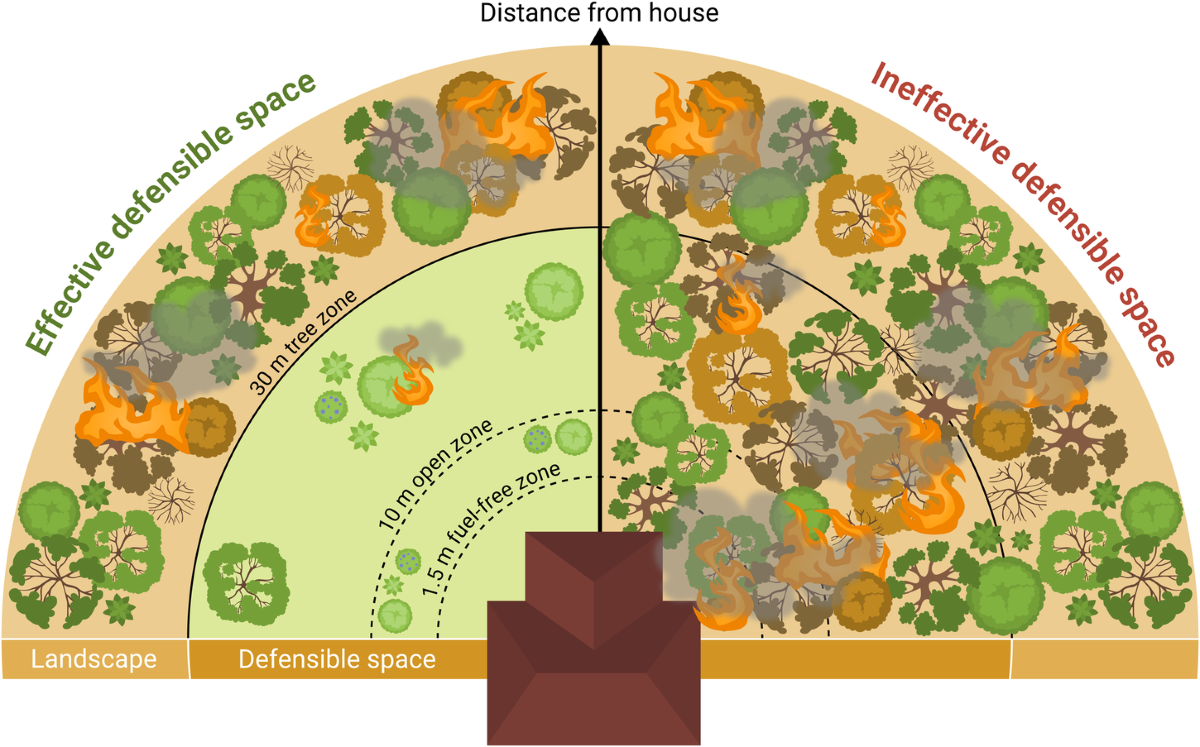
When defensible space is done well, it doesn’t feel like something has been taken away. It feels like something has been revealed.
Effective defensible space focuses on spacing vegetation so fire cannot easily move from one fuel source to the next, while allowing healthy plants and trees to thrive. This approach protects structures, improves land health, and often results in a property that looks more open, intentional, and visually balanced.
Thoughtful vegetation spacing
In wooded, forested, and residential settings alike, effective defensible space does not mean removing all vegetation. It means intentionally spacing trees, shrubs, grasses, and other plants so fire cannot easily move from one fuel source to the next. This includes:
- Increasing distance between tree crowns so fire cannot move easily from canopy to canopy
- Removing or modifying ladder fuels, such as shrubs or small trees growing beneath larger vegetation
- Breaking up continuous shrub and brush masses that allow fire to build intensity
- Reducing dense or continuous grasses and fine fuels that carry fire rapidly across the ground
- Creating irregular, varied spacing rather than uniform or cleared-out areas
By selectively reducing overcrowded or poorly positioned vegetation across all layers, remaining plants gain better access to sunlight, water, and nutrients. Healthier vegetation is more resilient — not only to wildfire, but also to drought, disease, and long-term stress.
Selecting what to remove — and why it matters
Effective vegetation management prioritizes how fuels connect, not just how much vegetation is present. The goal is to remove or modify vegetation that contributes to continuous fire pathways while allowing healthy, well-spaced plants to remain.
Priority is typically given to removing or reducing:
- Dead or dying vegetation of any type, which contributes fuel without ecological benefit
- Diseased or insect-damaged plants that threaten surrounding vegetation
- Overcrowded or suppressed vegetation competing for limited resources
- Excessive shrubs, brush, or regrowth that connect ground fuels to higher vegetation
- Vegetation in direct contact with structures, including homes, decks, fences, sheds, and other outbuildings
This selective approach reduces competition and breaks fuel continuity while allowing remaining vegetation to thrive. Over time, healthier plants develop stronger root systems and improved structure — contributing to both wildfire resilience and soil stability.
Reducing “noise” in the landscape
One of the most overlooked benefits of spacing vegetation is visual clarity. When dense, competing growth is reduced, properties often feel calmer and more intentional. Homeowners are frequently surprised by how much beauty was hidden beneath the clutter.
Well-spaced vegetation allows:
- Mature trees to stand out as focal points
- Natural contours of the land to become visible
- Sightlines and access routes to improve
This is not about making land sterile — it’s about allowing the healthiest elements to shine.
Protecting the land while reducing fire risk
Spacing vegetation instead of stripping it preserves:
- Root systems that stabilize soil
- Ground cover that reduces erosion
- Native plants adapted to local conditions
Studies from UC Cooperative Extension and USDA NRCS confirm that properly spaced vegetation significantly reduces erosion risk, particularly on slopes common in wildfire-prone areas.
This approach aligns wildfire protection with long-term land stewardship.
The balance between safety and stewardship
Creating defensible space does mean letting go of some trees and vegetation. That can be emotionally difficult, especially on properties with long-established landscapes. But when removal is done intentionally, the result is often a property that feels healthier, safer, and more livable — not less natural.
Defensible space done right supports:
- Safer fire behavior around structures
- Healthier vegetation and soil
- Reduced long-term maintenance
- A landscape that feels both protected and respected
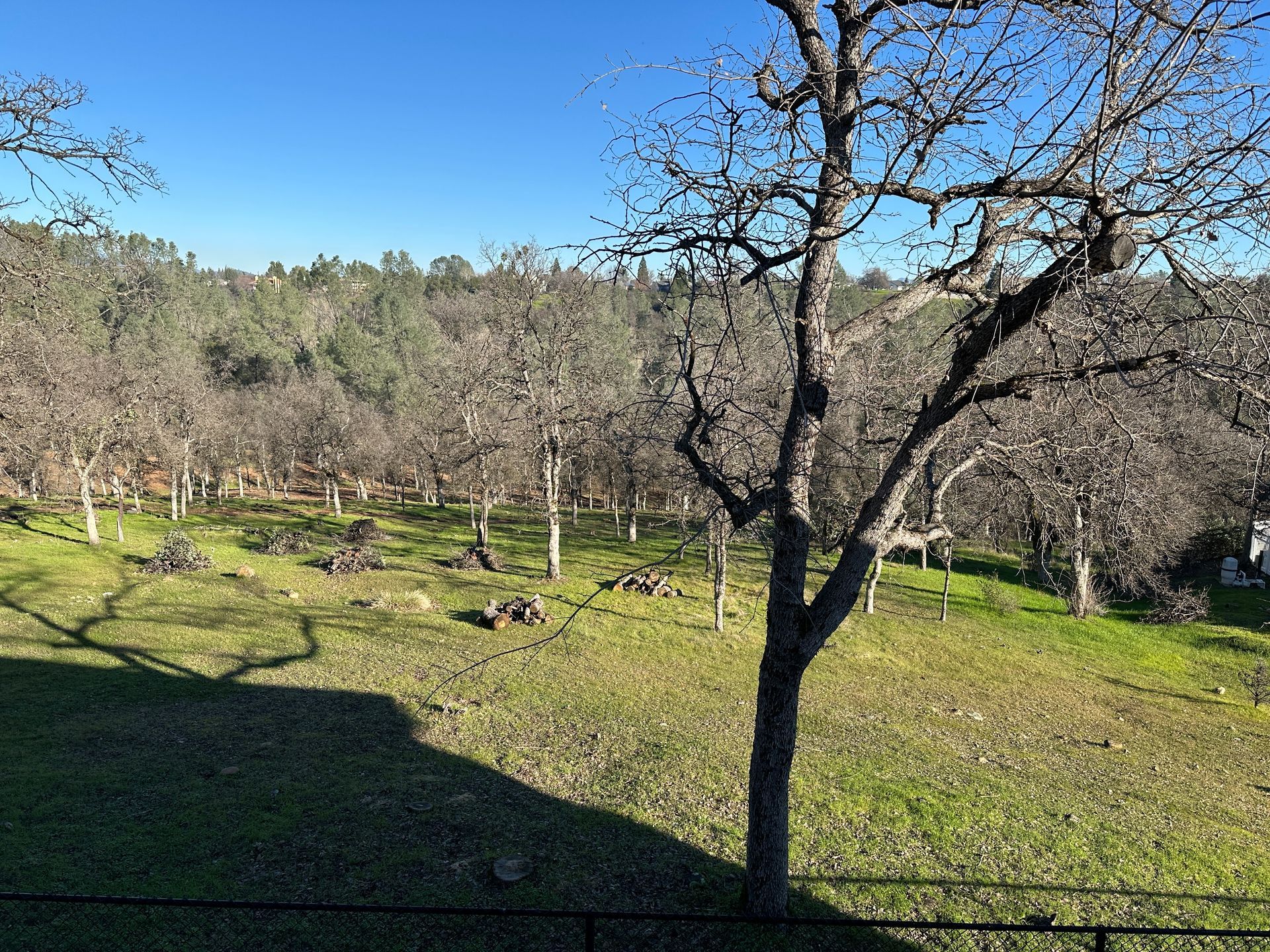
Long-term wildfire resilience comes from understanding fire behavior, respecting land systems, and making intentional decisions about spacing, materials, and maintenance.
Need Help Applying This to Your Property?
Understanding defensible space is one thing — applying it to a real property with unique vegetation, terrain, and structures is another. Every landscape is different, and the right approach depends on how fuels connect across your land and around your home.
Grind Fire Defense is here to help. We work with homeowners to translate defensible space principles into site-specific, practical solutions that balance wildfire risk reduction with land health and long-term maintenance.
Our services include:
- On-site property assessments and defensible space evaluations
- Thoughtful vegetation management and fuel reduction
- Support with planning, documentation, and follow-up as needed
- Experience working within CAL FIRE and Wildfire Prepared defensible space guidelines
If you’d like help understanding what makes sense for your property, you can call us or book a consultation or estimate to get started. We also share ongoing education and real-world examples on our YouTube channel for homeowners who want to keep learning.
📞 Call or text: (530) 999-2035
📧 Email: lori.templeton@grindfiredefense.com
📍 Serving: Shasta, Tehama, Butte, Siskiyou, Trinity, Glenn & Lassen Counties
The goal isn’t perfection — it’s clarity, progress, and safer outcomes over time.
Share this article on